Valuable information and contacts related to child advocacy and support services throughout the Lewis-Clark Valley and surrounding communities.
Prevention & Education

Darkness to Light empowers adults to prevent, recognize, and react responsibly to child sexual abuse through awareness, education, and the reduction of stigma. We believe protecting children is an adult’s responsibility, and that education and training are key to empowering action. Evidence-based and trauma informed Stewards of Children® training—one of the only adult-focused child sexual abuse prevention programs in the United States—has been proven to increase knowledge and change behavior. By equipping individuals and organizations, we help communities take proactive steps toward creating safer environments for children.
Appropriate for educators, child-service organizations, churches, and more – contact us if your organization is interested in participating in this valuable prevention program.
Safer Smarter Families

The Safer, Smarter Families Safety Toolkit is designed to help your family address personal and digital safety learning in a way that is comfortable and accessible for both you and your children.
Educate your family and empower your child to think smartly about their personal safety and environment. Free age-appropriate options for kids of all ages.
Digital Safety
Victim of Sextortion?
Sextortion is one of the fastest-growing online threats facing children and teens today — and it’s costing lives. Learn more about the dangers of sextortion and what families must do to protect their children from digital predators.
Idaho Internet Crimes Against Children (ICAC) Task Force has developed exceptional resources for parents, teens, and educators to promote safety and education.
Victim Assistance
VINE is a free, secure, and confidential way to access custody status and criminal case information. Register for notifications and stay informed.
Idaho Crime Victims Compensation Program (CVCP) was established to assist victims of crime with costs related to treatment for injuries sustained as a result of a crime. The program is also responsible for covering the expenses associated with sexual assault forensic examinations for persons (adults and minors) victimized in Idaho.
Teen Dating / Intimate Partner Violence (IPV)
Teens often think some behaviors, like teasing and name-calling, are a “normal” part of a relationship. However, these behaviors can become abusive and develop into serious forms of violence. Many teens do not report unhealthy behaviors because they are afraid to tell family and friends.
Teen dating violence is common. Data from CDC’s Youth Risk Behavior Survey in 2021 indicated that among U.S. high school students who reported dating during the 12 months before the survey:
- About 1 in 12 experienced physical dating violence.
- About 1 in 10 experienced sexual dating violence.
It is important to identify healthy vs. unhealthy behaviors in dating relationships to establish safe relationship boundaries. Emotional, physical, and sexual abuse is NEVER okay.
For support:
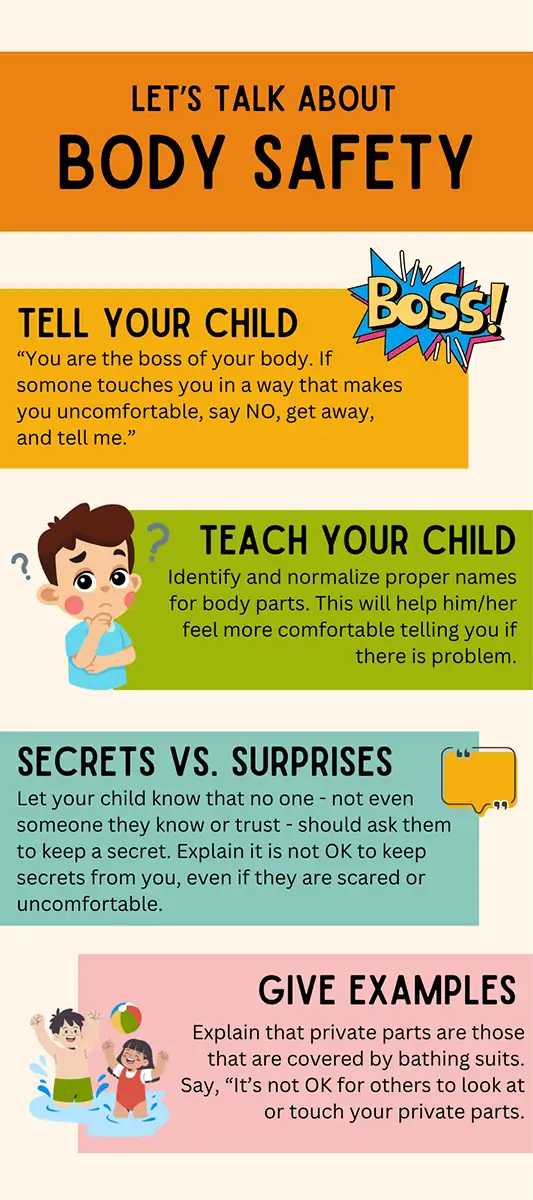
Body Safety
Download our Body Safety rack card. Tap or click to save to your device.